After one year of international cooperation, cultural exchange and friendship-building, the NaturEUnite – Nature Unites EU Citizens project has successfully reached its conclusion.
When NaturEUnite began, it set out three ambitious goals. In the short term, the project aimed to increase awareness of local natural, cultural and heritage values while improving mutual understanding among citizens. In the medium term, it sought to strengthen friendships and cooperation between people from different European countries. In the long term, the project aimed to increase participants' sense of belonging to the European Union and help communities recognise the benefits of European cooperation.
Rediscovering the value of nature and heritage
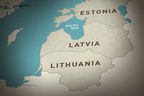
Over the course of five international experience exchange events in Slovenia, Latvia, Lithuania, Albania and Estonia, participants explored national parks, cultural heritage sites, local traditions and community initiatives. Through guided tours, workshops and discussions, they were invited not only to discover partner regions but also to look at their own regions through fresh eyes.
The results show that the project succeeded. Survey responses revealed that awareness of natural heritage values was already remarkably high among participants, with nearly three quarters rating their familiarity with their own region's natural heritage at the highest possible level.
At the same time, the project helped many participants develop a deeper appreciation of protected nature areas. Half of all respondents reported that their perception of protected areas had become more positive after the events. For many, seeing examples of successful cooperation between tourism businesses, local communities and nature conservation authorities challenged previous assumptions. Participants discovered that protected areas do not have to be seen as obstacles to development. Instead, they can become opportunities for sustainable tourism, local entrepreneurship and community growth when supported by good dialogue and mutual understanding.
Several participants reflected that they had gained new insights into how nature can be protected while still welcoming visitors. Others noted that the experience helped them better understand why certain restrictions exist and why preserving natural landscapes for future generations is worth the effort. One participant summed up the spirit of the project perfectly, observing that despite different languages and cultures, people across Europe are united by common values and a shared respect for nature.
Europe through the eyes of local communities
One of the strongest outcomes of NaturEUnite was the growth of intercultural understanding.
Rather than simply visiting destinations as tourists, participants were welcomed into local communities, attended traditional festivals, met local residents, explored everyday life and took part in cultural activities. These authentic encounters left a lasting impression.
More than 63% of surveyed participants said their perception of other European cultures had changed as a result of the project. Many spoke of discovering unexpected similarities between countries located hundreds or even thousands of kilometres apart. Participants were surprised to find common traditions, shared culinary influences, similar folklore and even familiar words despite geographical distance.
For some, the project completely changed their perception of countries they had previously known little about. Albania, for example, was frequently mentioned as a positive surprise because of its hospitality, cultural richness and harmonious coexistence of different religious communities.
Participants particularly valued the opportunity to experience local life first-hand. Rather than observing from the outside, they became temporary members of local communities, gaining insights into daily life, traditions and values that cannot be found in guidebooks.
Strengthening the sense of belonging to European Union
A key objective of NaturEUnite was to strengthen participants' connection to the European Union through personal encounters and shared experiences.
Throughout the project, discussions explored European values, multilingualism, freedom of movement, environmental protection and the opportunities created by European cooperation. Combined with face-to-face meetings and friendships formed across borders, these conversations proved highly effective.
The result was remarkable: every single participant who completed the final survey stated that the project had increased their personal sense of belonging to the European Union.
Many participants explained that getting to know people from other countries made Europe feel more tangible and personal. Several noted that the more they learned about other European regions, the more they felt connected to them. Others highlighted how important European cooperation is for smaller countries and communities, creating a shared space built on common values, goals and mutual support.
The project demonstrated that European identity is not built through policies alone. It grows through friendships, conversations and shared experiences that help people discover both their differences and the many things they have in common.
From new friendships to new partnerships
The impact of NaturEUnite extends well beyond cultural exchange.
Throughout the project, participants built friendships that continue long after the events themselves. Many have stayed in contact through social media, and several expressed their wish to participate in future editions simply because they wanted to meet again the people they had come to know during the exchanges.
The project also generated practical cooperation opportunities. Tourism entrepreneurs began discussing joint initiatives and future cross-border tourism services, while organisations explored possibilities for future collaborative projects.
More than 90% of surveyed participants said they see opportunities for future cooperation with people or organisations they met through NaturEUnite. Responses repeatedly called for the continuation of such exchanges, with participants emphasising that international cooperation is essential for addressing common challenges and creating meaningful results.
The message from participants was clear: one year was only the beginning.
Local communities as Gguardians of nature and heritage
Perhaps one of the most valuable lessons of the project was the recognition of the central role local communities play in protecting nature and cultural heritage.
Across all five events, participants encountered inspiring examples of community involvement, volunteer initiatives, local entrepreneurship and cooperation between citizens and institutions. Again and again, discussions returned to a simple but powerful conclusion: protected areas are not preserved by regulations alone. They are protected by people who care.
Participants highlighted that successful local development depends on cooperation, active citizenship and the willingness to learn from one another. They recognised that communities have enormous potential to create positive change and that sharing experiences across borders can inspire new ideas and solutions.
Looking ahead
NaturEUnite has shown that protected natural areas are far more than beautiful landscapes. They are places where friendships are born, ideas are exchanged, cultures are celebrated and European values come to life.
During a single year, the project increased awareness of natural and cultural heritage, strengthened mutual understanding among citizens from five countries, inspired new partnerships and reinforced participants' sense of belonging to Europe.
While the project itself has reached its conclusion, its impact continues through the friendships, cooperation networks and new ideas that were created along the way. These connections will serve as a strong foundation for future initiatives that continue to unite European citizens through nature, culture and shared values.
Lead Partner: Gauja National Park Tourism Association (Latvia)
Project Partners: Albania Sustainable Development Organization (Albania), Association Bogastvo podeželja (Slovenia), Lahemaa Tourism Association (Estonia), Soomaa Tourism Association (Estonia), Directorate of Aukštaitija National Park and Labanoras Regional Park (Lithuania).
The project was co-funded by the European Union through the CERV Town Twinning Programme.
 News
News
 Events



.jpg?w=144&h=96&mode=crop)